Pages

Showing posts with label flashpack. Show all posts

Monday, May 19, 2014

OSAKA: GREAT TIPS & TRICKS


This is the unedited version of my sidebar article for the June 2014 issue of Cruising, a Manila Bulletin publication. Thanks again to the editors.


1. Do not miss the foreign exchange counter at Kansai International Airport. You will not miss it due to the queue: 

Step 1: Someone gives you a form. Step 2: Someone checks your form. Step 3: Someone takes your form and money. 
Step 4: Someone releases your crisp Yen bills.

It will be difficult to withdraw from Japanese ATMs and finding a ForEx shop may be difficult.


2. Osaka has two main railway operators at the airport, Japan Railways (JR) and Nankai Namba. It is easy to be intimidated by the ticket vending machines, so approach any staff at the counter beside them for any help, to save time.


3. Breakfast at most high-end hotels can be expensive. Look for the closest Yoshinoya, for a hearty bowl of beef strips (small bowls at ¥280/P120). The rules are simple: sit, eat, go. There will be someone waiting for your seat more often than not. 


4. Soda is expensive. but service water is clean. A small bottle of cola at restaurants is around ¥200/P85.


5. When having Furai (deep fried meat or veggies, different from tempura), you should only dip your stick once into the bowl of sauce, as respect for other diners. The Ebi Furai (deep fried prawn) is a must-try.


6. When paying at a restaurant (or any other establishment), place your money on the small tray beside the cash register. You should also get your change from here. It is bad etiquette to hand your money directly to the cashier.


7. One subway station may have multiple lines passing through them. The easiest way to remember which line you need to take is by remembering their colors. Train tickets start at ¥200/P85. A station may be humongous so remember what your exit number is. Getting out of the wrong one may mean another 15-minute walk back to where you should have been.


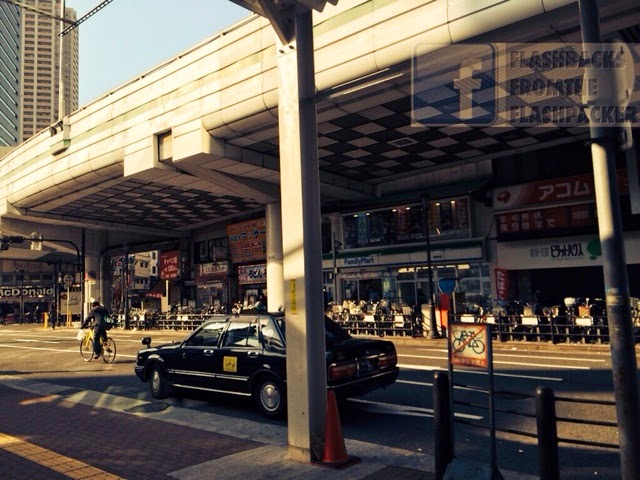
8. Taxi is expensive and may only be practical for short distances when there are three to four passengers. A five to ten minute ride may set you back ¥650/P280, so be wise. If it's one to two train stations away, it may be cheaper to take a taxi. Or better, just walk.


9. Trinkets as pasalubong can also be expensive. Decent keychains are around ¥400/P170 and fridge magnets are at ¥500/P210. You can just get authentic gifts for friends from convenience stores like 7-11 or Family Mart.


10. Those working in the service industry do not expect you to tip. If you really want to appreciate great customer service, you may just give them small peso bills and say they are souvenirs from your country. •

Saturday, May 17, 2014

My Osaka Opening


Everyone wants to go to Tokyo. Well, at least those I know. But Tokyo was too crowded for me. Too busy. And yeah, too expensive.

So when a budget airline started flying to Osaka, I got very excited. Four years and several seat sales later, I finally booked a real promo ticket. 

Elmer and I landed in the evening at Kansai International Airport. The customs staff stopped us (tough luck, yup, both of us). Now a tip for all those who'd be as unfortunate as we are - if you are never hiding anything prohibited, there is no reason to panic. Try searching Australia's Border Patrol on YouTube. 

The lady asked that we lay our luggage on their counter. She scanned all the contents of my for-a-fee baggage, and said "Thank you. You can go."

Right before we exited the airport, we were stopped by civilian airport police who asked us to show our passports. I was doubtful. What if this was a setup. A scam. Worthy of an episode on Scam City.

"Where are you going?", he asked. He looked harmless but the clandestine act of flashing his badge was a red flag for me.

"Osaka," I said. 

Come on, I was tired and hungry and I wasn't even carrying any drugs. Why the hell would we be stopped, twice, when everyone else seemed to be just breezing through all of the  checkpoints.

"Where are you going to stay?," the guy asked. At this point, I can tell Elmer was really worried. The police already had asked for our passport. Which I didn't want to give him. But i didn't want to spend my night in the airport detention room either. 

Light bulb moment: I took our hotel voucher out of my coat's inner pocket and instead of trying to give him a I-booked-a-hotel defense, I asked, "How do we get to Namba?".


His face transitioned from strict-looking to excited. Like a new tour guide who just got his first client. He pointed us to the train station.

"Just take the elevators up to the second floor, then turn left."

I smiled while he returned our passports. I thanked him and his "Goodbye!" was this country's way of saying "Welcome to Japan!"


Osaka is actually an hour away from KIX. You can take the train. Or the bus. Or a taxi. Taxi is a lot more comfortable and should be fine if you are willing to pay P16,000. One-way. No typo, no extra zero: sixteen thousand pesos.

So, after changing money at the airport, we took the train. The station was right outside the airport's main building. And when we got there, I was totally confused. 

So there's JR. And there's Nanka. 

If there was one thing I hated about my pre-research, it was that I couldn't figure out how the railway systems in Japan work. I mean, Seoul's Subway System looked more complicated than a spider's web but it doesn't take a genius to figure it out.  But Osaka's? You have to experience it to understand it. 

I was standing in front of the ticket machine. Above me is a complicated  train system map. And around me are possibly more than twenty other machines. I looked at the monitor and after five minutes, I concluded that I couldn't figure it all out.

Elmer asked the counter and the staff explained we can buy the ticket from him. Why didn't the machine say so? The ticket to Namba Station, our base for the trip, was 1100 Yen. Around P500. That wasn't bad at all. Considering that we were all alone, save for one guy, in car number 6.

A little over half an hour later, past the suburbs, we got to Osaka's Namba Station in the Minami Area.

It was a good thing our hotel was right at the station. We could even call someone to pick us up from their special kiosk at the station. But we were in a hurry to check in. 


Now, the hotels in Japan do not come cheap. I mean, you can get hotels for as little as P2,000++ but that'd mean living in a matchbox. And with the amount we paid (about P7,500 per night), we got a bigger room. A great view of Osaka. A couch. A bath tub. And a bed that can sleep twenty people. Okay, I was exaggerating, but it was really big. 

The only problem I have with paying close to $200/night is that the rate does not even include breakfast. No, not even one piece of a teeny weeny Takoyaki Ball. •

Sunday, August 4, 2013

DEATH IN CAMBODIA Part 3

Angkor Wat


"What do you call this?", you point to the photo on your phone, asking the waiter where this big tree is. Though you didn't see Angelina's Tomb Raider.

"Ta Prohm," the Angkor Cafe waiter says and instructs you to just tell your tuktuk driver its name and you should be there in 15 minutes.

Above: Make sure to catch the
sunrise in Angkor Wat

Below: The Giant Tree
in Ta Prohm
Yes, you thought Angkor Wat was just one big complex, with all the temples and the Tomb Raider references. An hour earlier, you were just looking for it (that big tree) in Angkor Wat, but apparently you were wrong. The "Angkor Wat" we know has multiple sites, and public transport may be a hassle, so better hire a tuktuk. You got yours for $12, with pickup from the hotel at 5am, returning after lunch.

You get to Ta Prohm and the tuktuk can't drive you past the gate anymore. TC starts snapping photos again, and the sound of Cambodian music starts to fade in. After 10 minutes of walking, you see what could be the tallest tree you have seen in your entire life.

You and TC take turns in taking each other's photos, with you avoiding to offend the monk in the background. Earlier though, you took some photos of monks, beside the house you believe they live in. You're still in shock though, after seeing a smoking monk.

Past the very organized tour group of Koreans, all obediently following their guide's instructions, you navigate back to the entrance of the compound to say goodbye to your "Angkor Wat" experience, though technically, again, this is not Angkor Wat.

It's just about noon, and while tourists marvel at the history of all these Siem Reap temples, you thought of a different thing to do. While Superman navigates the highway linking  the temples to town, you ask your tuktuk driver while the motorcycle engine roars, "Can you bring us to a market where no tourists go?". He agrees.

Fried Crickets, anyone?
Half an hour later, you and TC try to find souvenirs in a local market in the middle of nowhere. No tourists, save for a Caucasian couple who may have had temple overload too. Everything costs $5, at least that's what the storekeepers tell you. You, however, don't bother how much edible crickets your five dollars could get you. •

Sunday, June 3, 2012

BANGKOK BANTER: SEARCHING SALADAENG


"Saladaeng?", you worriedly ask the airport bus driver, while holding on to the back of his seat and trying to balance, as the bus is moving.
The bus stops at a red light. You have read in your previous Wikitravel research that Bangkok traffic is horrible. You never expected it was this bad. An hour after leaving the airport, you are still on the road.

The driver picks up what looks like a map with numerous checks written over the passengers' stops.

With a thick Thai accent, he tells you, "Saladaeng, there," he points to the back to the bus, indicating that we have passed my stop and he actually forgot to drop me off. Great. This is just so great, considering today is your birthday.

"We come back later," he assures you, as if that is some consolation that you should be thankful for. He mutters something Thai, probably saying he will just bring all passengers to their destination, then drop you off on his way back to the airport.
You settle back in your airport bus seat, trying not to be pissed. You look out the bus window, looking for street signs, and checking your travel guide book where you are. It looks like the weather is nice, as it is sunny. You take a deep breath. You should probably be in your hotel by now, resting, in the Pop Art Room you fell in love with the first time you saw it online.

Bangkok resembles home. Traffic is bumper to bumper to bumper. Some streets seriously resemble Taft Avenue, complete with their very own MRT stations. Had it not been for the street signs in Thai, you'd probably think you are still home.

Half an hour later, on the busy road of Silom (which your travel book says is the Thai Ayala Avenue), the driver stops and tells the last passenger (yes, that's you) that this is the Saladaeng stop, pronounced as "Sah-lah-deng".
You pick up your bag and still manage to blurt out a barely audible thank you, even if deep down inside your heart, your mind, and your soul, you should be cursing this bus driver who should have dropped you here 45 minutes earlier. But you didn't want to do that - you fear that karma would be faster in Thailand, a predominantly Buddhist country.

Tuktuks, the Thai version of a tricycle, with an open air back, zoom past you. You are amazed by the number of pink taxicabs around. You cover your nose with a hanky and cough a bit, since you feel like the smoke from the gazillions of cars around you is starting to envelope you. 
It was a little past lunch time now. You are hungry, sleepy, and tired. To top that, you feel lost in the  middle of  Bangkok. And the weather is making it worse - it is about 30 degrees Celsius. 
You are at the corner of Silom and Saladaeng - tall buildings, money changers, retaurants, bars, convenience stores, and coffee shops all around you, with the Bangkok MRT line dissecting this crowded part of the city.

You pull out the hotel map and walk towards where you think the hotel is. You walk past street vendors and though you are tempted to eat mami, Thai-style, you wanted to settle in your hotel room first. Frustrated, you walk up to an effeminate guy on the phone outside the salon where he works. He is probably talking to his boyfriend, but you forgot all the manners you have, try to butt in, and ask for directions. Surprised, and a little annoyed, he instructs you to go down the road further, and says that it should be right after a small market. The vision of you sleeping beside fish and vegetables is not a good one, but you proceed to search for your hotel.

Baan Saladaeng (which literally means Saladaeng House) is on a small soi, a Thai alley. The hotel is painted red and sits at the end of the alley, assuring you that it is far from the maddening crowds of Silom. And thankfully, the market is closed today. Not much people around. Finally, you can rest.

Art, the friendly receptionist, greets you as you push the door. The hotel looks new and very homey
Art looks at his computer screen and calls you by your first name. "I've been waiting for you! Were you lost?"
You just manage to smile, trying not to answer the question. Instead you ask him, "So where are the clubs?"

Eight hours after arriving at your hotel and  getting some well deserved sleep, you find yourself outside DJ Station on Soi 2 in Silom, a stone's throw away from Patpong - one of the craziest areas in Bangkok.

You pull your phone from your pocket. In it is your brand new Thai Sim Card. You dial your new friend's number. 
"Art, I'm already here!".
Ten hours after arriving in Bangkok, you find yourself partying with people from Brazil, Singapore, and Thailand - people you don't know. It is your birthday night and not a single soul  among them knows. Being in a foreign land on this special day may seem sad, but being around people you don't know and you probably won't meet again  lessens your inhibitions - back home, you work hard, but this night, in Crazy Bangkokyou will party harder
_____________________________________________


YOUR COMMENT ON THIS ENTRY 


CAN GET YOU THIS MUG!


Flashbacks from the Flashpacker is giving away another custom-made coffee mug to a lucky reader in the Philippines. Leave a comment on this blog site or the Facebook wall  - https://www.facebook.com/FlashbacksFromTheFlashpacker. A lucky Flashbacks from the Flashpacker reader who will leave the craziest, funniest, and loveliest (LOL) comment on the Bangkok Banter blog entry will be chosen by 11:59PM, Saturday, June 09, 2012. Valid only for readers with a Philippine shipping address. Thank you!


Wednesday, April 18, 2012

The Legend of the Flashpacker Part 4 (The Conclusion): A Traveler is Born


BASED ON A TRUE STORY

When you can't take it anymore, do you take a deep breath? Or do you walk out?

You choose to leave your tour group.

Surrounded by green HK trams, red taxicabs, and a gazillion apartment buildings, you walk around aimlessly, wondering how this could happen to you.

Cantonese-speaking locals in fleece jackets walk past you. The smell of freshly steamed dimsum lingers in the air. Your tummy tells you you need to stop and grab a bite somewhere. You place your hand on your stomach. Yeah, you feel it grumbling. You can even hear it growling, despite all the Cantonese pop songs blasting from the giant speakers of clothing and cosmetics stores you pass by.

You are hungry, but your head tells you to pull out your itinerary sheet again to check the address of the hotel. TST, Kowloon.

You have to head back to Tsim Sha Tsui. And you have no idea where that is.

You follow the swarms of people all hurrying to get home. You pull out your blue scarf, as the temperature keeps on dropping every second. You look up the sky.

The sun is about to set.  All you want to do now is go back to the hotel, find your way out of here, and get some rest.

You follow a group of young Hong Kong-ese in tasseled boots, hoping they'd walk straight to the subway station. Minutes pass. They pause at a bus stop and get on a yellow bus with a big Admiralty sign.

You pull out your tourist map this time. You learn that Admiralty is where you can transfer to a subway station en route to Kowloon where Tsim Sha Tsui is.

Too shy to ask for directions, you start scanning all the bus numbers and their destinations on the bus timetable. What the heck? You tell yourself to just take the next bus and it'd probably bring you somewhere where there is a subway station.

A yellow double-decker bus stops before you. You get a little disoriented, since driving in Hong Kong is on the left side of the road. The digital sign says North Point. You get on, hoping it'd get you somewhere closer to your hotel.

Good thing a friend back home lent you an Octopus Card, so you swipe it against the machine beside the driver, following the locals' lead.

You settle in the third row. You look around. Everybody seems to be minding their own business, all excited to go home, have dinner with their families, and probably watch Cantonese soap before calling it a day.

A high school girl in pigtails seated beside you is reading her English textbook. Amused, you hesitantly ask her, "Excuse me. Do you know where the next subway station is?"

Probably surprised, she looks at you and only murmurs "Oh!". She then removes one hand from her book and presses a button beside her. Did you just scare her? You are about to say sorry, until she opens her mouth again, "Subway, next stop."

You smile and say "Xie xie", even if your thank you is in Mandarin. Locals use Cantonese in this part of China but everyone seems to understand Mandarin anyway. Besides, thanks in Cantonese is too difficult to pronounce.

"Your stop," she says pointing to your right. People start standing up and getting off, so you follow, after thanking the kid.

You take the escalators going down the station and walk behind the locals again. Getting lost isn't that bad after all.

Quarry Bay. This is what the subway map says. You are supposed to take the blue line heading west and transfer to the red line in Admiralty going back to Tsim Sha TsuiPiece of cake, you tell yourself.

You can do this.

The next train arrives. You get on. No seats. So you settle beside the door and check the map posted on top of the train’s windows.

The train moves and suddenly you feel something is wrong.

Today REALLY is your lucky day. Instead of taking the blue line, you accidentally boarded the purple line!!! You are hungry, you are lost, and you are on the wrong train.

You hear the next stop announcement in Cantonese. Then Mandarin. Then English: Next Stop, Yau Tong.

Yau what?

The train grinds to a halt. And you don't hesitate to get off. Then, you hear it again: your stomach grumbling. You feel your throat is dry.

You. Gotta. Eat.

Okay. Don't panic. Deep breath. 

You decide that a few minutes outside the station to find a restaurant won't probably cause you to miss the last train. It's HK. It's a first world country. You can find your way around. Hopefully.

So, you try to find your way out of the yellow train station. Passing by a map of the neighborhood, you try to search for the nearest restaurant. No luck. You think, "Why don't I just ask a local?"

And so you do. You approach a young guy, as you exit the station. He’s probably heading out to the city from what looks like a rural part of Hong Kong, a place you never read about online; one missed by your travel guide.

"Excuse me, do you know if there is a restaurant somewhere here?" He points to the left and tells you, "Take minibus", and before you can ask why, he has taken off.

There is no minibus in sight. You could not even find the minibus stop (maybe because it's a mini bus stop?).

You check your HK MTR map again. You are in Yau Tong station. Good thing you are back in KowloonWell, that's a relief. But to get back to your hotel in Tsim Sha Tsui, you either take the green line that goes north, then transfer to the red line. Or head back to HK Island on the purple, then blue, then red line. You are counting which route would take fewer stations, when Minibus 24 miraculously stops before you, as if it was sent by heaven.

The driver smiles, and sensing you are a tourist (How could he??? Oh yeah, the map). You hear Lei Yue Mun. 

You ask the driver again, "Where does..."

You haven't even finished when he tries an English sentence, but all you understand is sea-foot.

Sea what? Seafood

You drool at the thought of grilled fish, buttered shrimp, and calamari. You get on the minibus.

The drive was just a short one and before you can say I am lost in Hong Kong but I don't care, the driver drops you off. He points to a small fishing village and says "Lei Yue Mun".

You marvel at the junk boats lining the channel. You never saw this side of Hong Kong during your pre-trip research. Not even on the Internet. You take a photo, proceed to walk past the Chinese arc, and wonder if this is Chinatown.

You snicker at the thought. Hong Kong is one big Chinatown itself.

You follow some teenage locals hoping they are headed too to the seafood restaurant the driver was trying to tell you about earlier. You just wish you understood the rest of his Chinese-accented English so you could find your way more easily. 

You were checking the last few photos you took on your phone, trying to convince yourself that you could be a travel photographer, when you start hearing shopkeepers shouting in Cantonese. Could it be a brawl?

You expected woks flying. 


But no one is fighting.

You check the sign boards around you: This Seafood, That Seafood.

Welcome to Lei Yue Mun Seafood Bazaar.

A small, dark alley leads you to aquariums full of sea creatures, still alive. From shrimps, to prawns, to fish, to shellfish. And all species and families in between.

There are stores selling raw seafood exclusively, restaurants that can cook the seafood you just purchased, and other shops which you think that can do both.

For some reason, you feel sorry for these little creatures. You could not take the thought of picking a 
still swimming fish and have him cooked minutes later. Besides, when you asked the old grandma how much it'd cost, you knew that you should have brought someone along and split the bill --- somewhere around $US 20-30. 

You check how much HK dollars you have left. Right pocket: HKD25. Left pocket: HKD15 and some change. Wallet: HKD50.

You couldn't afford to eat here, you tell yourself.

Disappointed, you try to find your way out of the Seafood Bazaar. It was an interesting walk though. Out of your four friends who have been to HK, you conclude that nobody among them has been here, based on their advice (which mainly revolved around Disneyland) and their Hong Kong Facebook albums, which you checked the night before your flight. 

You were already looking for your minibus stop, when you notice two locals make a quick turn in front of you. You quickly inspect what could be in the small alley. 

You almost raised your hands to heaven when you see a Chinese eatery.

Since it looks like a small, family owned restaurant, you instantly feel more comfortable. No pressure to buy, no old ladies shouting, unlike at the Seafood Bazaar earlier. You ask the friendly grandpa, who probably owns the restaurant, "Pai fan? Mei you?". Do you have rice? 

He smiles, "Putonghua!". Mandarin in Mandarin. Uh-oh, he thinks you are Chinese. He places a Chinese menu on the plastic table.

You check your phrasebook again. Some of the words are too long, so you just pick the easiest, "Eeng-woon!". English.

Grandpa says "OK, OK", walks back to his table and gets another menu, but this time with English translations. You order a Coke, while picking which pai-fan meal you'd have. You settle for the HKD25 Shrimp and Egg Rice. Maybe US $3. Not bad.

Grandpa comes to collect the menu and tries to strike a conversation. With his limited English and your 
yi-tiyen-tiyen Mandarin, you swap stories and learn that he has been running this restaurant for over twenty years. You don't remember how many times you mentioned WOW, but the smell of Chinese food is keeping you in the mood for an interesting conversation with a local. He was trying to tell you about the village’s Seafood Festival, and drums, and dancing when your food arrives. Grandpa excuses himself to let you eat and proceeds to entertain other customers.

As you pour Chinese soy sauce into your plate full of rice, shrimps, and egg soup, you start reminiscing about the past few hours. 

Walking out on your tour group.
Walking aimlessly behind locals.
Hopping on a random bus.
Boarding the wrong train.
Getting lost in rural Hong Kong.
Finding a seafood market by accident.
Exchanging stories with a local restaurant owner.

You are officially off the beaten path. 

You are no longer the tourist you were when you woke up this morning. As you munch on the best Chinese meal you have had since arriving in this interesting territory, you pull out your phone and logon to Facebook


New status message: A traveler is born. ●